
Error monitoring, logs, and AI triage without the platform sprawl.
Squasher is a focused Datadog alternative for application teams that need grouped errors, logs, session replay, OpenTelemetry context, and release-aware incident triage.
- 01Scope
- 02Compare
- 03Test
- 04Decide
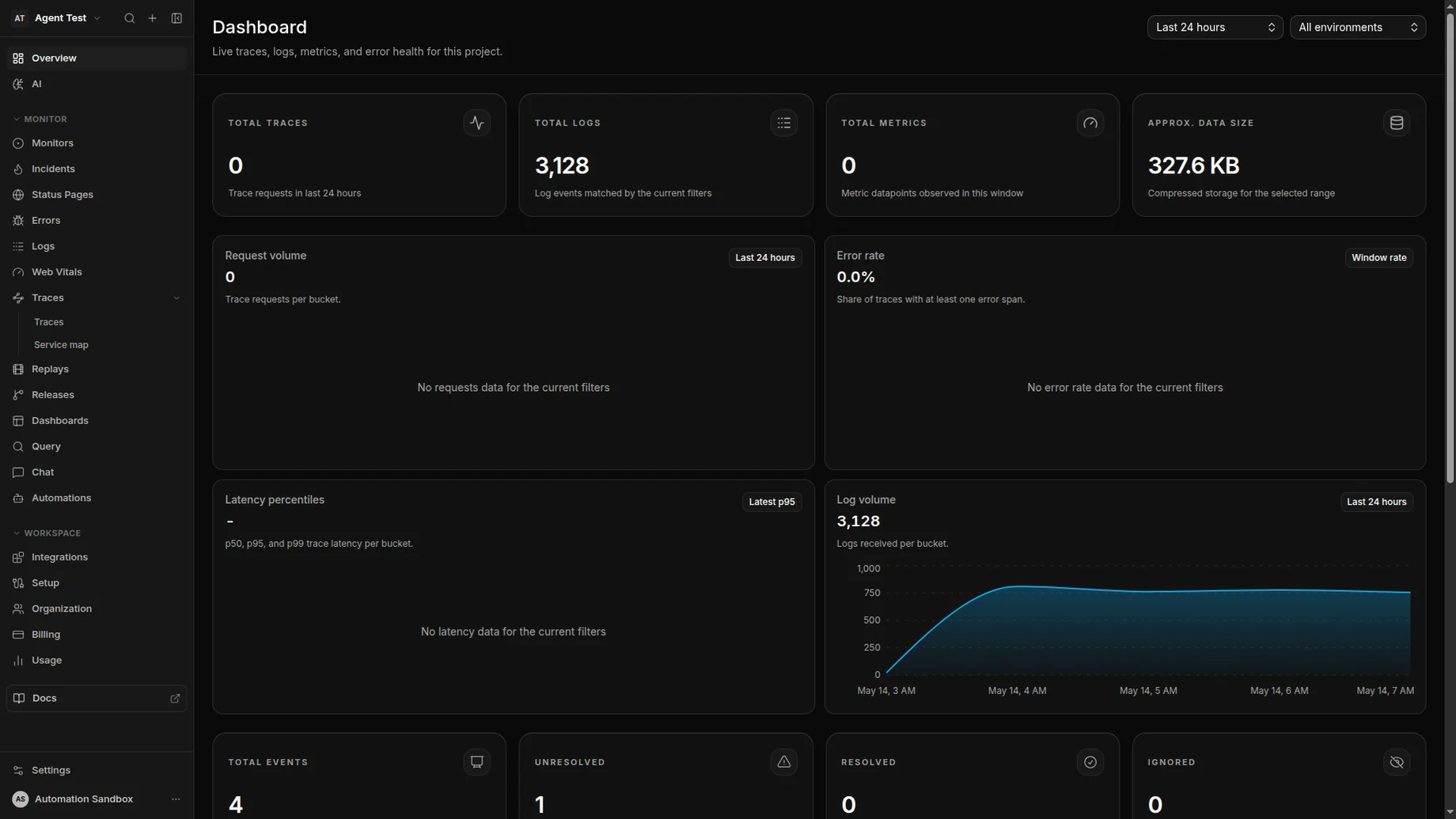
AI triage linked the exception to checkout logs, a session replay, a trace span, and the release that changed the failing path.
Fit
Use Squasher for app debugging. Keep Datadog for full infrastructure scope.
The narrow promise matters: Squasher does not replace every Datadog capability. It gives application teams a focused incident workflow when errors and logs are the core pain.
Use Squasher when product and application teams need errors, logs, replay, release context, and AI triage in one workflow.
Keep Datadog for broad infrastructure monitoring, host and container operations, or platform-wide observability programs.
Run both during migration when teams need to compare event shape, alert quality, ownership, and saved views before changing on-call behavior.
Pain points
Telemetry volume is not the same as a reviewed incident.
For product and application teams, the practical problem is often understanding the regression fast enough to ship the fix.
Application incidents become harder to review when errors, logs, replay, and release context live in separate tools.
High-volume telemetry can create dashboards without giving responders the next debugging step.
Product teams may need a focused workflow for app regressions instead of a full infrastructure observability rollout.
Migration is safer when one service, drain, or OTLP pipeline is mirrored before alerting changes.
Comparison matrix
Datadog versus Squasher for application failure triage.
| Category | Datadog fit | Squasher fit |
|---|---|---|
| Error monitoring | Strong fit when error tracking is part of a broader Datadog observability estate. | Focused error groups with logs, replay, releases, ownership, and AI triage attached. |
| Logs | Best when logs already power infrastructure, platform, and service operations. | Best when logs need to explain application incidents and release regressions. |
| Session replay | Useful when replay belongs inside a larger Datadog deployment. | Replay stays close to grouped errors and the surrounding incident evidence. |
| OpenTelemetry | Good fit for teams standardizing telemetry inside Datadog. | OTLP logs and traces enrich application failure triage without a full platform move. |
| AI triage | Evaluate based on the Datadog products and workflows your team has enabled. | AI triage is designed around application failure evidence and responder review. |
| Infrastructure scope | Appropriate for full infrastructure monitoring and platform observability. | Not a full infrastructure replacement; focused on app debugging workflows. |
Migration
Start with one app, one stream, or one OTLP pipeline.
A product-safe Datadog migration keeps overlap in place until event shape, alert quality, and ownership are trusted by responders.
Inventory current Datadog coverage
List services, environments, saved searches, monitors, and dashboards that must stay stable during the overlap window.
Mirror one stream
Start with one app, project, log drain, Datadog Agent path, HTTP forwarder, or OTLP pipeline.
Compare incident shape
Check grouping, service tags, environment labels, request identifiers, source maps, and alert noise.
Move ownership gradually
Recreate the views and alert rules that responders actually use before moving paging behavior.
Retire duplicate forwarding
Disable duplicate routing only after Squasher alerts are stable and connector keys can be rotated.
Use cases
Focused Datadog alternatives usually start with app incidents.
Squasher is strongest where a product-facing failure needs evidence, ownership, and a reviewed next step.
Vercel apps
Route platform logs and app errors into one reviewable release timeline.
Next.js apps
Connect browser errors, server logs, replay, source maps, and deployment context.
Backend services
Keep request logs and trace context beside grouped exceptions and owners.
Product teams
Debug customer-facing regressions without adopting every infrastructure monitoring workflow.
Incident review
Summarize the evidence, likely cause, and next step after a release causes failures.
FAQ
Answers for teams comparing Datadog alternatives.
Short answers around scope, log ingestion, OpenTelemetry, migration risk, pricing comparisons, and when Datadog should remain in place.
- Is Squasher a full Datadog replacement?
- No. Squasher is not a full infrastructure monitoring platform. It is focused on application errors, logs, replay, OpenTelemetry context, and incident triage.
- When is Squasher a good Datadog alternative?
- Squasher is a good fit when the Datadog pain is application debugging, noisy logs, release regressions, and too many tools around error response.
- When should we keep Datadog?
- Keep Datadog when your team needs broad infrastructure monitoring, mature platform dashboards, host-level coverage, or an existing Datadog operating model.
- Can Squasher ingest logs from Datadog pipelines?
- Yes. Use the Datadog Agent or Datadog HTTP connector to mirror selected logs into Squasher during rollout or migration.
- Does Squasher support OpenTelemetry?
- Yes. Squasher accepts OTLP logs, traces, and metrics so teams can route OpenTelemetry context beside grouped errors.
- How should we compare pricing?
- Compare the workflows you actually need. Squasher is designed for teams consolidating error monitoring, logs, replay, and AI triage, not for replacing every Datadog SKU.